Li-ion batteries (lithium-ion)
Elfa's experts are ready to answer any questions and provide further assistance.
.png)


A Li-ion battery, also known as a lithium-ion battery, offers a number of advantages. This battery is lightweight, has a high energy density, and exhibits very low self-discharge. At Elfa, we also have the capacity to produce custom battery packs using Li-ion batteries. Read more about Li-ion batteries on this page.
The benefits of a li-ion battery
A lithium-ion battery is known for its various benefits. This battery has (1) a high energy density, (2) relatively low weight, and (3) a long lifespan. Unlike non-rechargeable lithium batteries, a lithium-ion battery is rechargeable. This advanced battery technology is widely used in portable applications, consumer electronics, and electric vehicles.
Lithium-ion batteries provide similar or even higher energy output than other battery types, such as NiMH batteries, while the weight is approximately 20% to 35% lower. This is particularly beneficial for devices where the battery accounts for a significant part of the total weight. An additional advantage of Li-ion batteries is that they do not suffer from the “memory effect,” which means that battery capacity does not decrease if it is not fully discharged before charging. In addition, lithium-ion batteries are environmentally friendly because they are free of toxic substances such as cadmium or mercury.
Applications of a li-ion battery
Lithium-ion batteries are widely used, from consumer electronics to professional systems. In devices such as smartphones and laptops, Li-ion batteries are popular because they are lightweight, powerful, and durable, with a long life between charges. The same properties also make Li-ion batteries very suitable for professional applications. Below, we explain a number of examples in more detail.
- Electric vehicles: for electric cars and buses, it is important that the batteries can store large amounts of energy, as these vehicles must be able to travel long distances without needing to be recharged. Because lithium-ion batteries meet these requirements, they are widely used in electric cars and buses.
- Renewable energy storage: in solar and wind systems, lithium-ion batteries are used to store energy produced during peak production periods. This energy can then be used when needed, such as during cloudy days or periods without wind.
- Portable electronic tools: tools such as drills, saws, and lawnmowers benefit from the high energy density and fast charging capacity of lithium-ion batteries, as they can operate for longer periods without needing to be recharged.
- Medical devices: Llithium-ion batteries are often used in the medical sector to power portable devices such as electronic wheelchairs, portable oxygen concentrators, and other vital medical equipment that require reliable and long-term operation.
Elfa lithium-ion batteries
Elfa offers a wide range of lithium-ion batteries for various applications. In addition, we also supply standard Li-ion battery packs with UN certification, ensuring safe and compliant use and transport.
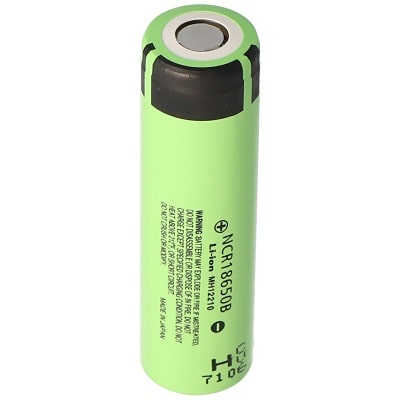
An important brand in our range is Panasonic. These lithium-ion batteries are known for their high energy density, long lifespan, and reliable performance. They can be used safely without additional safety wiring and operate within a temperature range of −20 to +60 °C.
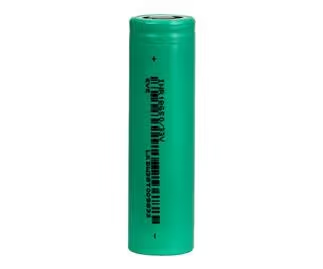
At Elfa, you will always find a lithium-ion battery that suits your application and requirements. We also offer lithium-ion batteries from Samsung and EVE.
Chemical decay and risks with li-ion
Lithium-ion batteries have many advantages, but they require careful use. Due to their chemical composition, they can overheat in the event of a defect, with a risk of spontaneous combustion or flash fires. This risk is small, but it increases if the battery is charged incorrectly. Using a suitable, high-quality charger significantly reduces the risk of damage.
A lesser-known disadvantage is chemical ageing: the capacity of a Li-ion battery starts to decrease immediately after production, even when it is not in use. At 25 °C, a Li-ion battery loses an average of about 20% of its capacity per year; this occurs faster at higher temperatures. As a result, a laptop battery, for example, often has a practical lifespan of 3 to 5 years.
Lithium-ion batteries always include a safety circuit in the battery pack, consisting of:
- A controller (IC) that monitors the voltage of each cell and prevents overcharging or too deep discharge via cutoff switches.
- A temperature fuse that permanently interrupts the circuit at too high temperatures.
- A thermistor (PTC) that measures the total temperature of the package. These terminals are connected to the charger so that it can adjust the charging current if the temperature gets too high.
Benefits of lithium-ion batteries
- High energy density (up to 400 Wh/L)
- No maintenance required
- High nominal voltage 3.6V or 3.7 per cell
- Very low self-discharge
- No memory effect, can be charged at any time
- Possibility of high charging currents (0.5-1A) for faster charging
- Constant discharge voltage for stable power throughout the discharge period
- More environmentally friendly than other batteries
- Relatively lightweight
- Long lifespan
Disadvantages of lithium-ion batteries
- Not resistant to deep discharge
- Poorly resistant to heat and cold
- Specific storage requirements and, in particular, transport
Customized Li-ion battery packs at Elfa
In addition to standard Li-ion batteries, Elfa also offers custom Li-ion battery packs on. We offer this option if regular batteries or batteries are not sufficient for the application in question. This is because the situation may arise that a certain type of battery is no longer available. In that case, Elfa will produce its own lithium-ion battery pack that fully meets the wishes and requirements of the customer.
These customized solutions are assembled in our own production facility and are tailored to your requirements, looking at dimensions, voltage, capacity, connector and even sealing. At Elfa, a Li-ion battery pack can be put together for brands such as Saft, Tadiran, Panasonic and Varta.
By the way, our lithium-ion battery packs have a UN certificate, which guarantees worry-free transport. This is because a UN transport certificate is required for transport when battery packs are connected in series or parallel, because the mechanical composition must be strong enough for transport to run smoothly. Feel free to contact us if you have any questions about our Li-ion packs!
Other rechargeable batteries
A lithium-ion battery has a larger energy storage capacity than NiCd batteries whether NiMH batteries. The lithium-ion battery can store the highest amount of energy per kilogram (140 Wh/kg). In laboratory tests, this variant can also be charged much more frequently. A more expensive one polymer construction offers even better properties, especially when it comes to power density. This means that a lot of energy can be supplied in a short time.
However, depending on the situation, other rechargeable batteries may also be of interest to your application. Which battery is most suitable depends, of course, on the application for which the battery is used. This is because a certain factor can outweigh one application than the other.
The overview explains various battery variants on issues such as charging speed, reliability and self-discharge. Feel free to contact us if you have any questions or for advice.

Frequently asked questions about lithium-ion batteries:
- How long does a lithium-ion battery last?
- What are lithium batteries?
- What is the difference between lithium and alkaline batteries?
- Why do lithium button cell batteries have a long lifespan?
- How to charge a lithium-ion battery?
Do you have any questions about our range of lithium-ion batteries? Don't hesitate to contact us. By the way, we are also happy to provide you with information about other battery types. Our experts will provide you with advice and answer any questions you may have.