Rechargeable batteries
Elfa's experts are ready to answer any questions and provide further assistance.
.png)


With more than 100 years of expertise in battery technology, Elfa Elementenfabriek is a reliable partner for industrial rechargeable batteries and secondary battery solutions. Through the continuous development of innovative rechargeable technologies, Elfa delivers high-quality, customized energy solutions that meet the demands of professional and industrial applications. These solutions combine sustainability, cost efficiency, and high performance, enabling companies to achieve reliable and future-proof energy storage.
.avif)
Our range of rechargeable batteries
Elfa has a wide range of rechargeable batteries from A-brands such as Panasonic, Saft, Varta, GP Batteries and Tadiran. These brands are known for their reliability and consistent quality, ensuring sustainable performance across a wide range of applications. Many of these products are available directly from stock. Our team is ready to assist in finding the ideal solution for your specific requirements.
Total Cost of Ownership (TCO) rechargeable batteries
When investing in high-quality rechargeable batteries for industrial applications, it is essential to look beyond the initial purchase price. The Total Cost of Ownership (TCO) provides insight into all costs over the entire lifecycle of the battery solution. This includes direct costs such as purchase, energy consumption during charging, maintenance, and potential replacement.
In addition, TCO takes into account indirect factors that influence total costs, including charging speed, lifespan, cycle performance, and reliability under operating conditions. By considering these aspects, companies can make well-informed investment decisions that lead to lower operational costs over the long term.
Sustainable rechargeable batteries with a longer lifecycle reduce the need for replacements, improve operational reliability, and contribute to both cost savings and a lower environmental impact.

1. Lithium-ion (Li-ion)
Lithium-ion batteries are versatile and efficient, ideal for everyday use in consumer electronics as well as for more demanding applications such as electric vehicles. Their low self-discharge and fast charging capabilities make them suitable for a wide range of products, while their long lifespan helps reduce the Total Cost of Ownership.
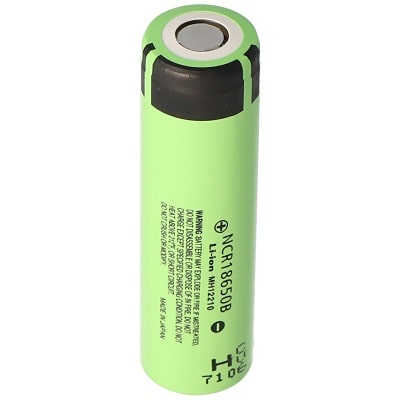
Benefits of Li-Ion batteries
- High energy density: with an energy density of up to approximately 400 Wh/L, Li-ion batteries offer highly efficient energy storage.
- Long life and maintenance-free: li-ion batteries have a long life cycle and do not require periodic maintenance.
Disadvantages of Li-Ion batteries
- Sensitive to temperature changes: performance declines at extreme temperatures
- Strict transport and storage requirements: due to their chemical properties, specific safety guidelines apply to Li-ion batteries.
2. Lithium Iron Phosphate (LiFePO4)
Lithium Iron Phosphate (LiFePO4) batteries are ideally suited for high-quality and long-term energy solutions in professional and industrial electronics. This battery technology is known for its high safety, longevity and thermal stability.

Benefits of LiFePO4 batteries
- Maintenance-free and deep discharge capability: can be deeply discharged without damage
- Long lifespan and high energy density: offer a longer service life than many traditional battery types
Disadvantages of LiFePO4 batteries
- Higher initial investment: upfront cost is higher compared to many other battery technologies
- Limited availability: product availability can be more restricted
3. Nickel Cadmium (NiCd)
Nickel-cadmium (NiCd) batteries are known for their high discharge currents and reliable performance over a wide temperature range.
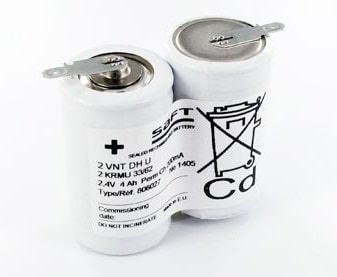
Benefits of NiCd batteries
- Robust and high cycle life: very durable and capable of many charge cycles when used correctly
- Good performance at low temperatures and fast charging capability
Disadvantages of NiCd batteries
- Memory effect and low specific energy
- Environmental impact and recycling requirements: the use of cadmium makes NiCd batteries less environmentally friendly
4. Nickel Metal Hydride (NiMH)
Nickel metal hydride (NiMH) batteries are a more environmentally friendly alternative because they contain no heavy metals.

Benefits of NiMH batteries
- Higher capacity: approximately 30–40% more capacity than standard NiCd batteries
- Relatively environmentally friendly
Disadvantages of NiMH batteries
- Limited lifespan with deep discharge: repeated deep discharge may reduce lifespan
- Complex charging management and higher maintenance requirements.
5. Lithium polymer (LiPo)
LiPo batteries, known for their light weight and flexible form factors, offer superior energy density.

Benefits of LiPo batteries
- Lightweight and high energy density: approximately 20% to 35% lighter than comparable NiMH batteries
- No memory effect and wide operating range
Disadvantages of LiPo batteries
- Sensitive to physical damage and overcharging
- Higher cost compared to some other battery types
Elfa as your battery specialist
Elfa is an experienced battery specialist and supports companies with expert advice in selecting the right battery solution.
Contact our experts!
As an experienced battery specialist for businesses, we are happy to answer all your questions about battery technology and industrial battery solutions. Do you need customized advice or are you looking for a reliable battery partner for your organization? Then contact us.